Goodness Through Food

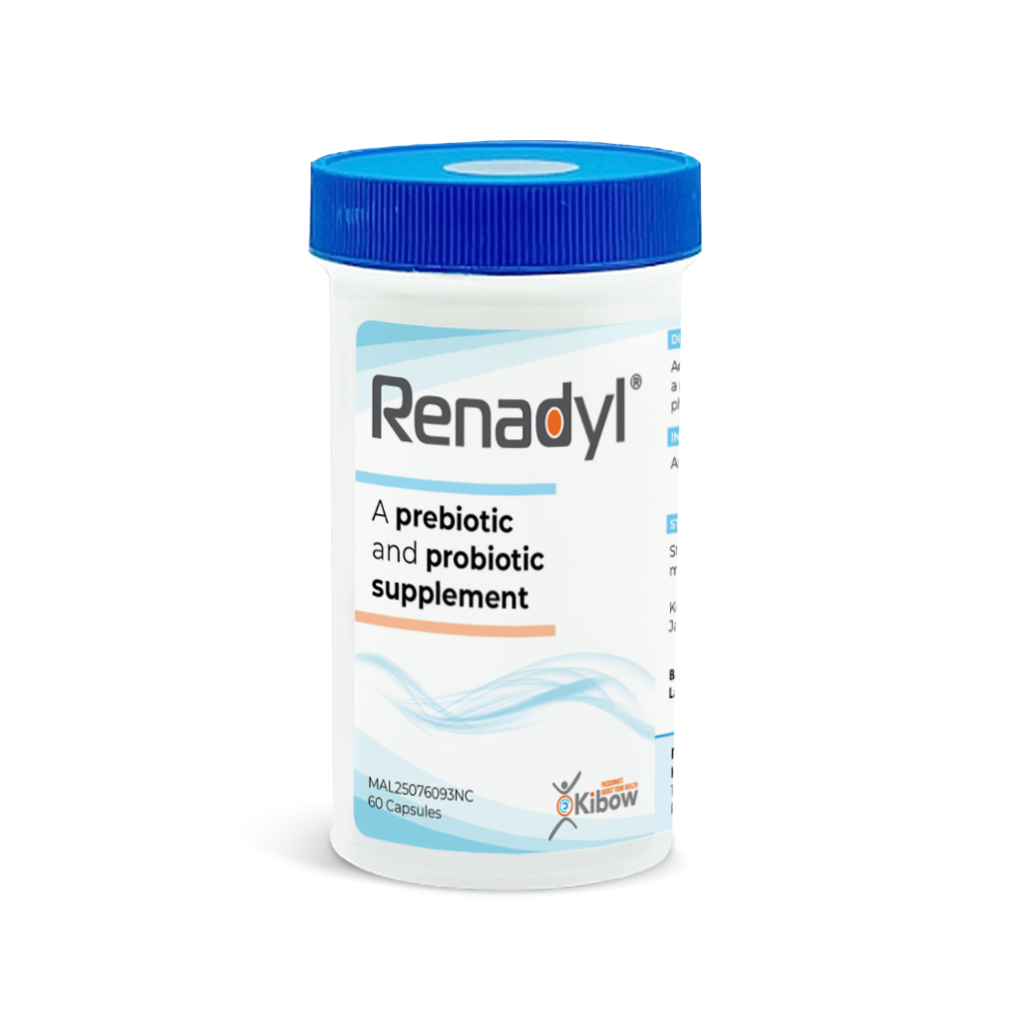
Renadyl

45 billion CFU of three (3) patented probiotics formulation to metabolize uremic toxins, help reduce creatinine, uric acid, and urea levels in the blood

Capsuled probiotics vegetarian, acid-resistant (enteric coated) to ensure live probiotics reach the intestine and withstand stomach acid for maximum effectiveness.

Synbiotic supplement with both probiotics and prebiotics, designed to help modulate the gut microbiome and reduce uremic toxins in individuals with chronic kidney disease (CKD).

Reg. No.: MAL25076093NC

Benefits

Probiotics

• Lactobacillus acidophilus protects against the progression of renal damage by modulating the gut environment and metabolizing the uremic toxins
• Bifidobacterium longum is a urease-producing probiotic which metabolizes urea
• Streptococcus thermophilus helps metabolizes urea and maintain gut microbiota balance by producing lactic acid, which inhibits harmful bacteria and supports digestive health
• Supports balanced gut flora and prevent overgrowth of harmful bacteria or dysbiosis

Prebiotics

• Xylo-oligosaccharide acts as a prebiotic that selectively stimulates the growth of beneficial gut bacteria
• Inulin serves as a fermentable fiber that nourishes probiotics, enhancing their colonization and metabolic activity in the gut
Causes of Kidney Problems

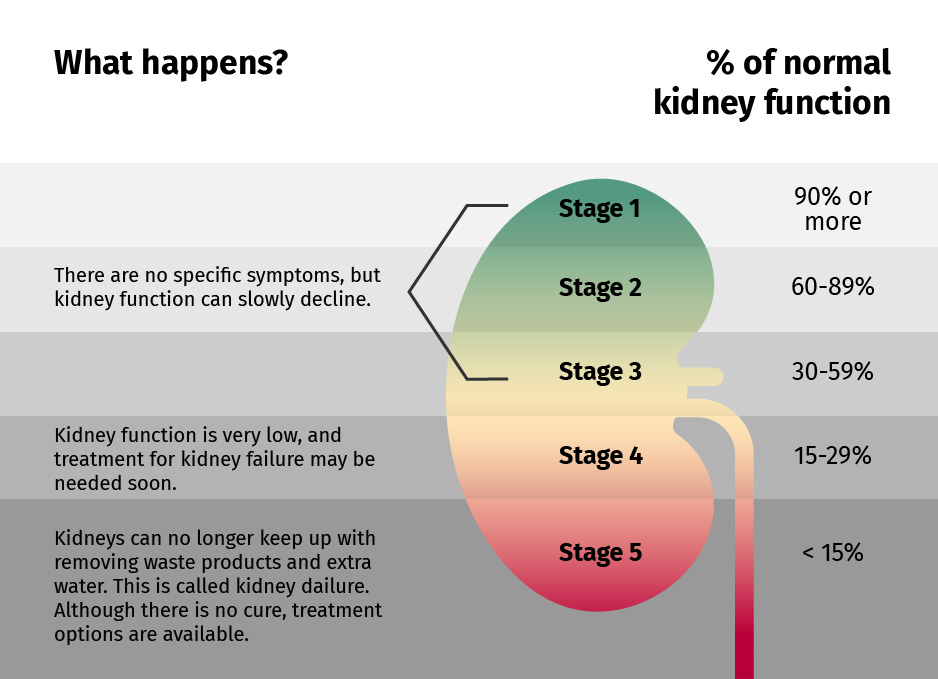
Chronic kidney damage did not occur so sudden, it is the gradual loss of kidney function over the times. Complications will develop if kidney damage is left ignored or unaware over the time.

The examples of uremic toxins:

  • Urea
  • Uric acid
  • Creatinine
  • Indoles
  • Phenols
  • p-Cresol
  • Nitrosamines

Therefore, early protection and a regular check-up remains the key to maintain good kidney health.

Dysbiosis is common complication that is normally happen in CKD patients. Overgrowth of pathogenic bacteria produces harmful uremic wastes in the gut.

Dysbiosis, characterized by an imbalance in the gut microbiota, is a common complication observed in patients with chronic kidney disease (CKD). The reduction of beneficial bacterial populations, coupled with an overgrowth of pathogenic and urease-producing bacteria, leads to increased generation of gut-derived uremic toxins such as indoxyl sulfate, p-cresyl sulfate, and ammonia. These toxins accumulate systemically due to impaired renal clearance, contributing to inflammation, oxidative stress, and further progression of CKD.

Usage method

Consume 1 capsule 2 times per day with a meal(s) or as recommended by physician.

Do consult physician prior to taking this or any other dietary supplements.

Gap at least 3 hours with antibiotics

Storage

Do not freeze.

Store at fridge (4 °C–8 °C or 39 °F–46 °F) to keep the probiotic bacteria viable.

Protect from sun light and moisture. Keep out of reach of children.